
Last updated: November 11, 2026
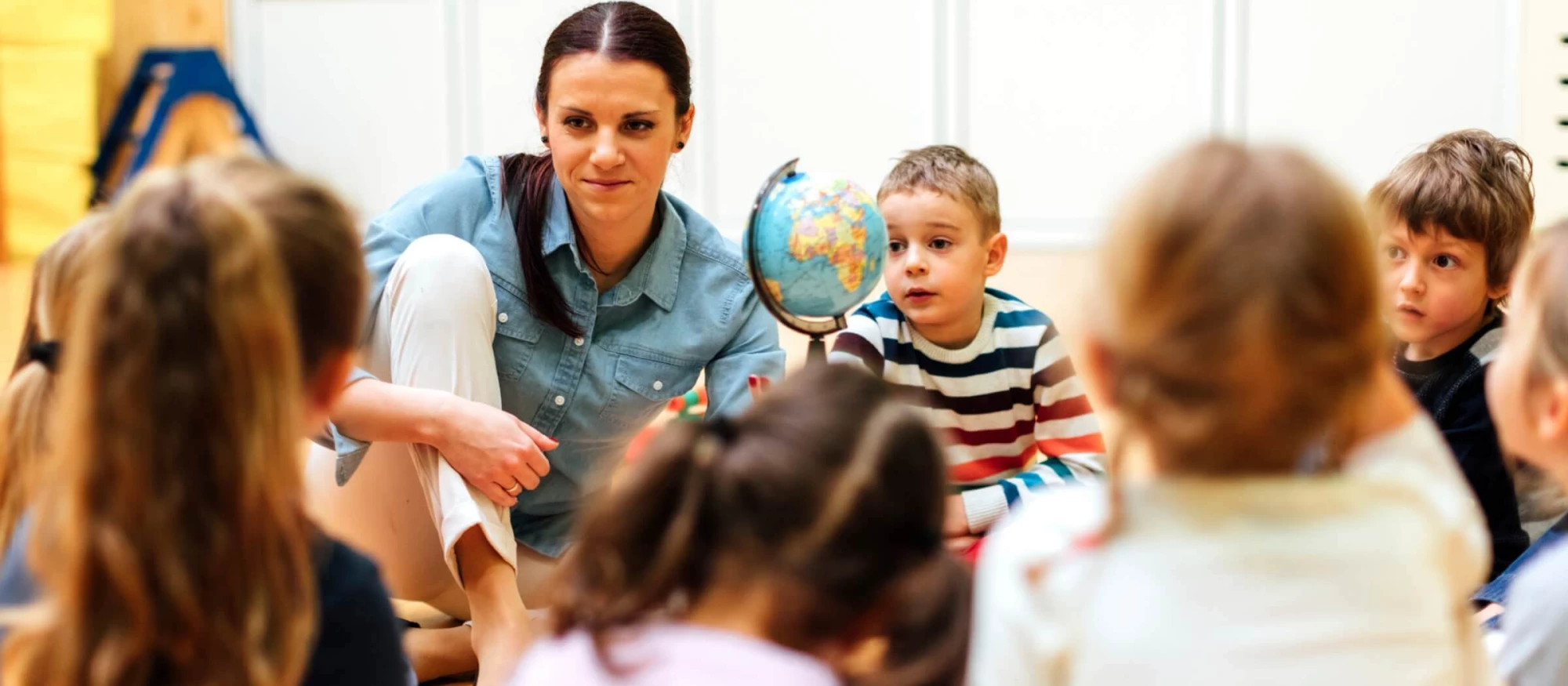
WorldKids® School is a full-day preschool and child care program where children learn in Spanish or Mandarin all day. Teachers speak to children in the classroom language through play, meals, music, art and daily routines, inside a play-based curriculum that prepares children for kindergarten.
Programs serve children generally from about 2 months to 6 years old. Starting ages vary by school.
Why start a second language this early?
The early years are when children pick up languages most naturally. Chaudry grew up in Germany, where hearing several languages on one block was ordinary, and started her first immersion program so her own son could grow up the same way. "Really introducing them from infancy and immersing them into a language is the best time to do it," she said. "At no other time will [they] be picking up languages so naturally."
Immersion is a head start, not a guarantee of fluency. How much a child keeps depends on how long they stay in the language, during preschool and after.

How are WorldKids schools licensed and rated?
- Licensed by the state. Washington schools are licensed by the Department of Children, Youth, and Families (DCYF). The San Jose school is licensed by the California Department of Social Services, Community Care Licensing Division. Every school meets its state's required staff-to-child ratios.
- Early Achievers. All of WorldKids' Washington schools participate in Early Achievers, Washington's quality rating and improvement system. As of October 2026, seven hold a Quality Level 3 rating, which DCYF describes as having "reached a high level of quality" through an on-site assessment. The others are participating and working toward a rating.
How do teachers keep parents informed?
Parents get daily updates through a digital app, with photos, plus newsletters about what each classroom is learning that week.
At WorldKids® School, we proudly embrace and celebrate all cultures & traditions
"5 Stars hands down!!! We compared a few daycares in the area and decided to send our daughters to Worldkids!! They are well organized, and communicated with us at every step during registration and enrollment. Our daughter loves here, the staff loves kids, development programs are great. They also offer an app for you to keep track on your kid's daily activities + pictures. I would highly recommend it. One thing to keep in mind, there is a long waitlist, so don't wait last minute, you will need to plan ahead, it's worth the wait to send your kids here."
What does the research say about early language immersion?
- Learning a second language doesn't cause delays. A joint policy statement from the U.S. Departments of Health and Human Services and Education says "there is no scientific research that suggests that learning multiple languages – or being bilingual – can lead to a developmental delay for children." The same statement calls early childhood "the ideal developmental time period for learning a second language."
- Immersion students scored higher in English reading. In a RAND Corporation study of Portland Public Schools, students admitted to dual-language immersion by lottery outperformed their peers on state English reading tests by roughly seven months of learning in grade 5 and nine months in grade 8.
- No trade-off in math or science. The same RAND study found no statistically significant gains or losses in math or science scores for immersion students.
- Spanish is the most common home language among U.S. English learners. Of the 5.3 million English learners in U.S. public schools in fall 2021, 76.4% spoke Spanish at home, according to the National Center for Education Statistics. Chinese was the fourth most common home language.
What does a typical day at WorldKids® look like?
"Do we have a curriculum? Do we have a structure? Yes," Chaudry said. "But it's not you're putting a child behind a desk. It's we're learning while we're playing."
At WorldKids® School, every day is thoughtfully designed to inspire curiosity, creativity, confidence, and a lifelong love of learning. Our play-based, bilingual immersion approach combines a nationally recognized early childhood curriculum (Creative Curriculum®, with Teaching Strategies GOLD® assessment) with hands-on learning, kindergarten readiness, and enriching extracurricular activities.
A typical day includes:
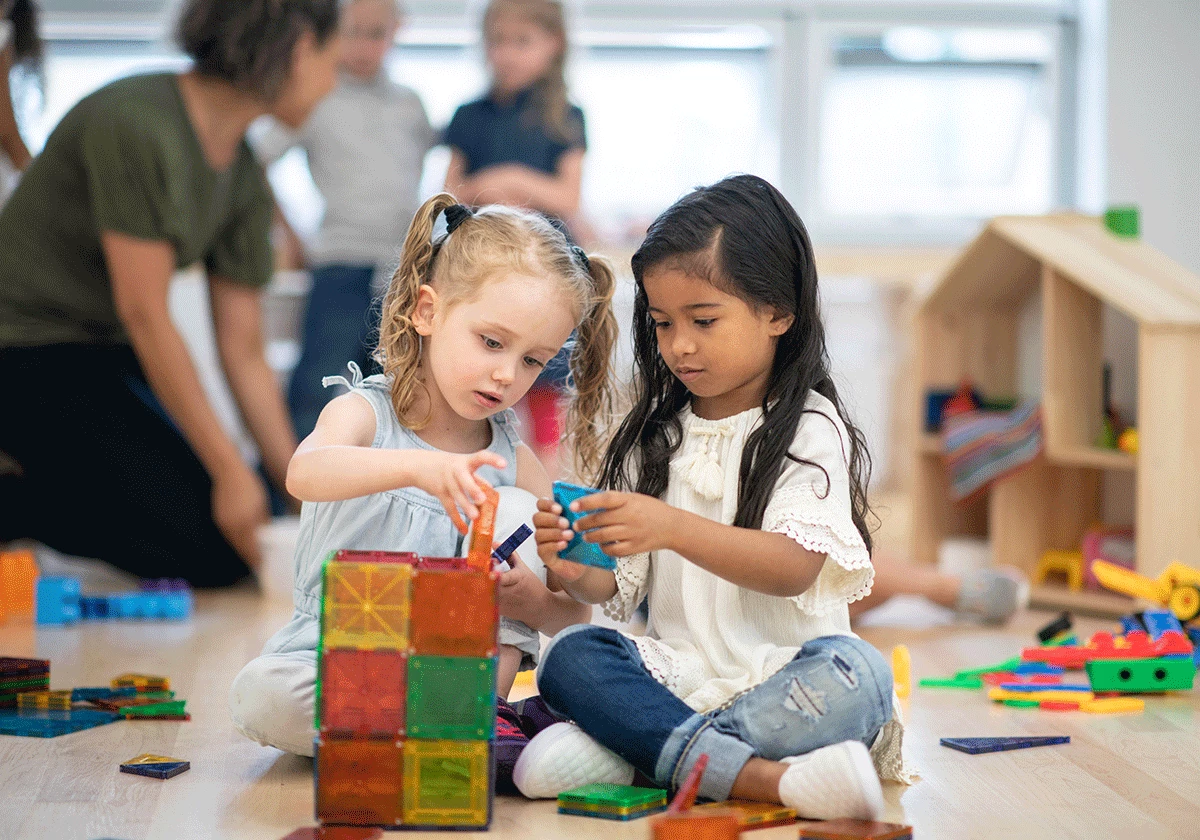
- Free Play and Learning Centers: Children explore building blocks, dramatic play, sensory tables, puzzles, books, and interactive learning stations that encourage creativity, independence, and problem-solving.
- Circle Time and Language Immersion: Songs, storytelling, calendar activities, group discussions, and monthly themes are introduced in Spanish or Mandarin, helping children naturally develop second-language skills.
- Kindergarten Readiness: Age-appropriate literacy, early mathematics, handwriting, science, and social-emotional learning prepare children for a successful transition to kindergarten.
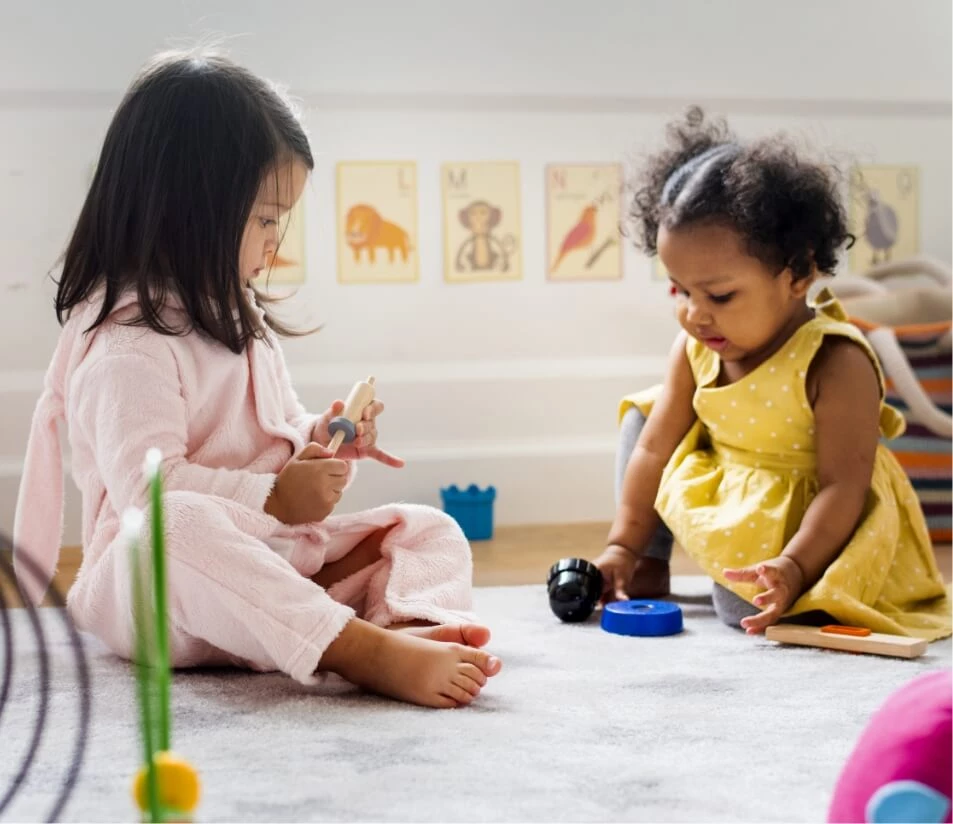
- Sensory Exploration: Hands-on sensory activities encourage discovery, fine motor development, critical thinking, and creativity.
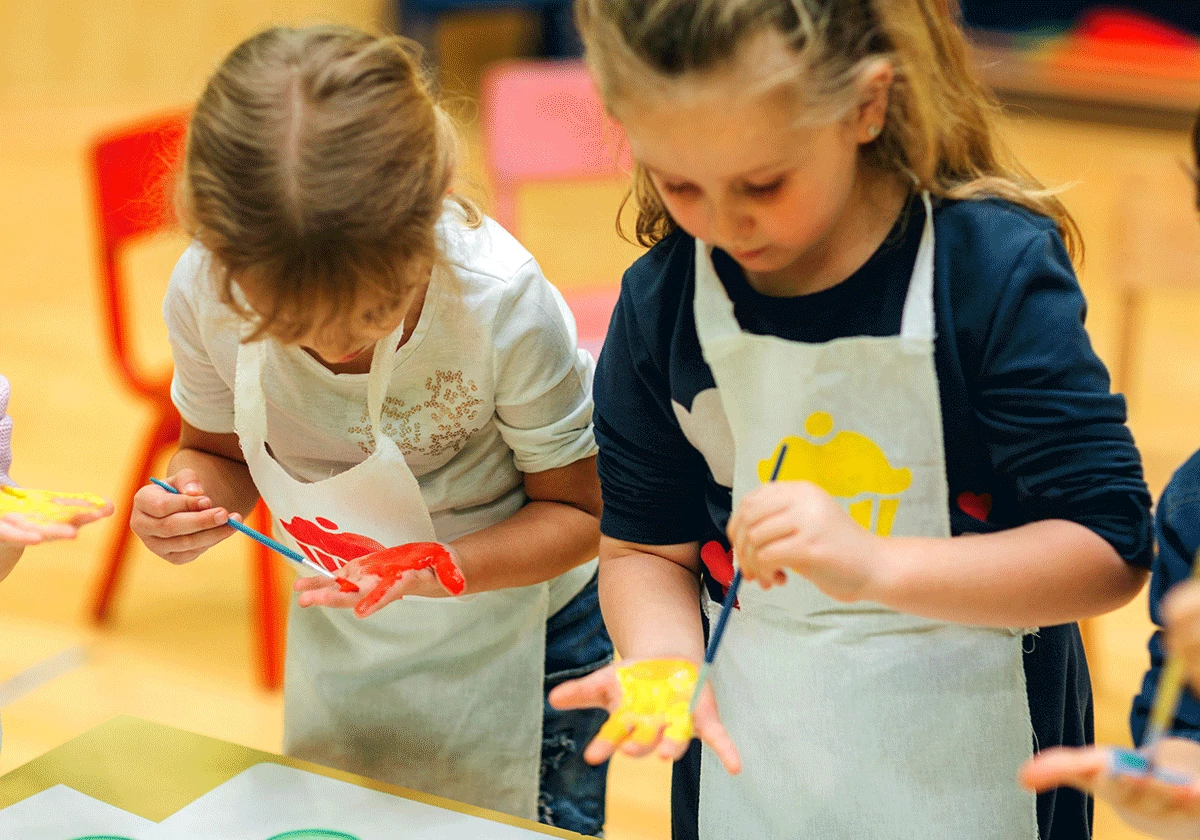
- Art and Creative Expression: Painting, drawing, crafting, and other art projects encourage imagination, self-expression, and fine motor development.
- Music Classes: Interactive music experiences introduce rhythm, instruments, singing, and movement while supporting language development and coordination.
- Dance Classes: Children develop rhythm, balance, coordination, and confidence through engaging dance and creative movement.
- Yoga Classes: Age-appropriate yoga encourages mindfulness, flexibility, balance, and emotional regulation.
- Soccer Classes: Fun, structured soccer activities promote teamwork, coordination, gross motor skills, and physical confidence.
- Playground Time: Children enjoy outdoor play on age-appropriate playgrounds, developing gross motor skills, confidence, friendships, and teamwork through climbing, running, imaginative play, and physical exploration.
- Outdoor Classroom and Nature-Based Learning: Learning extends beyond the traditional classroom through outdoor educational experiences, nature exploration, gardening, science discoveries, and hands-on activities that encourage curiosity and an appreciation for the natural world.
- Meals and Snacks: Nutritious meals and snacks are included in tuition, providing opportunities to practice language skills, social interaction, and healthy eating habits.
- Rest and Quiet Time: Age-appropriate rest periods allow children to recharge and maintain a healthy daily routine.
More than childcare: a complete early childhood education
What makes WorldKids® unique is that bilingual education, kindergarten readiness, music, dance, yoga, soccer, outdoor learning, and creative enrichment are integrated into the school experience rather than treated as separate, costly add-ons.
Our goal is to provide families with an exceptional educational experience that nurtures the whole child (academically, socially, emotionally, physically, and linguistically), all in one welcoming environment.
Preschool classrooms build early literacy, math, and social and emotional skills for kindergarten, all taught in the classroom language.
What age groups does WorldKids serve?
Age groups follow each state's licensing categories.
Washington schools
| Program | Ages |
|---|---|
| Infants | 8 weeks to 12 months (at schools that offer infant care) |
| Toddlers | 12 to 30 months |
| Preschool | 30 months to 6 years |
California (San Jose)
| Program | Ages |
|---|---|
| Infants | 8 weeks to 18 months |
| Toddlers | 18 to 36 months |
| Preschool | 36 months to 6 years |
Not every school offers infant care. Check your school's page for its starting age.
What to expect
WorldKids is a full day of early childhood care and education in Spanish or Mandarin. Families keep their home language. Children add a second one.
For parents still deciding, see how to choose a daycare or preschool, the difference between preschool and daycare, and how tuition works.
Find a school · Schedule a tour
Sources
- U.S. Department of Health and Human Services and U.S. Department of Education, Policy Statement on Supporting the Development of Children Who Are Dual Language Learners in Early Childhood Programs (2017)
- RAND Corporation, Dual-Language Immersion Programs Raise Student Achievement in English (Research Brief RB-9903, 2017)
- National Center for Education Statistics, English Learners in Public Schools (2024)
- DCYF, Early Achievers rating system

Explore our programs
WorldKids® School offers three program curriculums tailored for ages infant (8 weeks) to preschool (6 years). Each program includes celebrated milestones encouraging your child to grow & learn including Spanish and Mandarin Immersion.
